
Made to Belong
Bespoke furniture and custom joinery do more than fill a home. They shape how it feels to live in: how a morning begins, and how easily an evening lets go.
Words by Tizian Lange
Think of the first ten minutes of an ordinary morning.
A wardrobe door opens without effort. The shirt you want is where your hand expects it. A drawer closes softly behind you, and nothing in the room asks for your attention.
Nobody would call this a moment of design. Yet it is one of the reasons some homes feel gentle and others, however beautiful, feel slightly demanding. The difference is made up of small things that have already been taken care of.
The Relief of Everything Having a Place
A home holds a great deal: books, glass, linen, shoes, chargers, and the objects collected over years and journeys. When those things have nowhere to go, they gather around us and quietly pull at the mind. When they have a place, something eases.
Joinery drawn for one home gives those things somewhere to belong. A wall of cabinetry can carry much of a household and then soften back into the architecture. What remains is a room you can simply stand in.
One Line Through the House
Walk through a home whose elements have been drawn together and you will often feel it before you can explain it.
A console rises to the height of the window sill beside it. A bench continues the line of the cabinetry behind it. The timber of a wardrobe door picks up the tone of the floor beyond. Lines carry from the entrance into the living room and onwards to the terrace, so the eye does not have to reset from one space to the next.
That is coherence, and people experience it as ease. Rooms that agree with one another allow a person to stop scanning and start settling.
What You Never Notice
All of this depends on decisions made on paper long before anything is built, many of them designed never to be noticed.
Veneers selected from the same log can keep a wall of doors consistent in tone and continuous in grain. Leaves may be book-matched in mirrored pairs or laid sequentially, and the choice changes how the entire surface reads. A shadow gap a few millimetres wide can replace a heavy frame. Handles disappear, hinges are concealed and doors close softly. A shelf can glow without a visible fitting. Even what a room would rather hide — a service hatch, an access panel, a technical element — can be given somewhere discreet to disappear while remaining reachable.
Each decision removes one small irritation. Together, they remove much of the background noise of a house. That is why the result can feel so quiet.
In our process, joinery and lighting plans, material schedules and full specifications are resolved before building begins. That is how a room can eventually look this effortless.
Being Understood by a Room
This is the part we love most.
A dining table is sized for the gatherings that actually happen around it. A reading chair is considered in relation to the person who will sit there, the light beside it and where a cup might rest. A bar is designed around the glasses and bottles someone has collected over years. A wardrobe is laid out for a real morning, with hanging lengths set for the clothes that will live there and drawers positioned where the hand expects them.
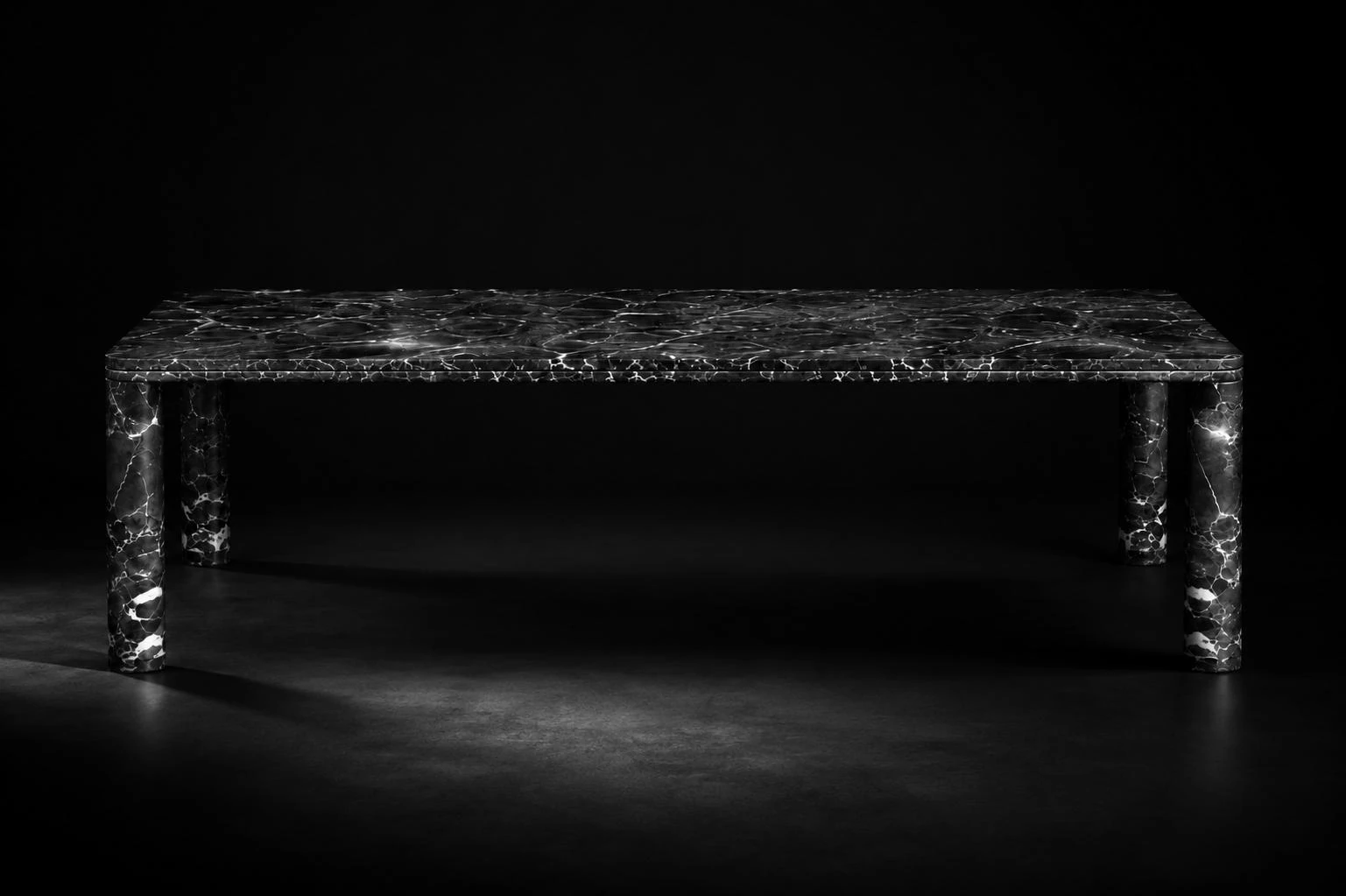
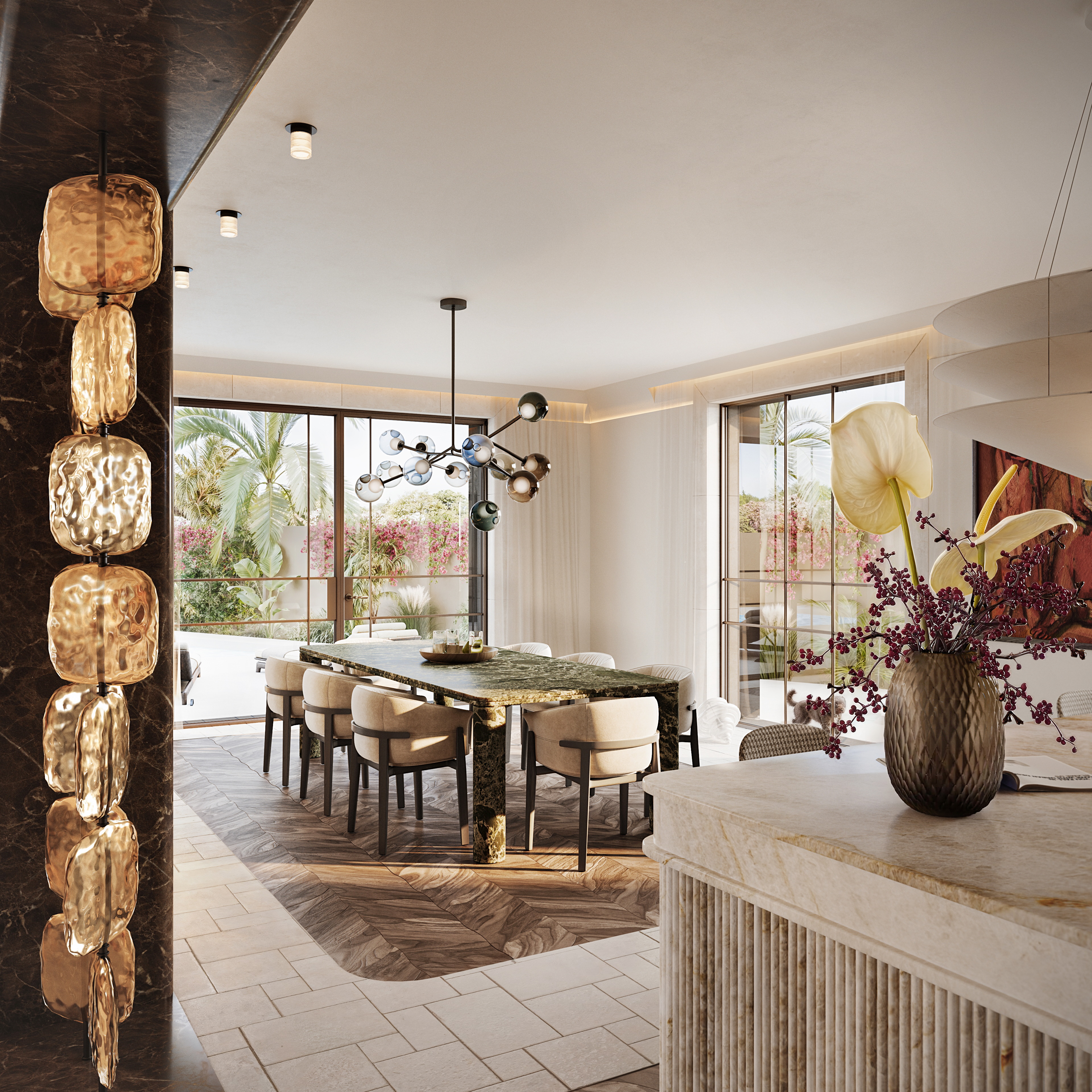
At Flame Tree Ridge Residence, the Luna Dining Table was drawn specifically for the proportions of the room rather than selected afterwards to fill it. Its length, position and material were developed alongside the surrounding architecture, so the piece belongs to the composition rather than sitting independently within it.
These details come from listening.
People rarely say, “I want to feel understood by my home,” yet that is often what they are describing when a room works for them. Pieces a family already loves belong in this too: an inherited table, a chair no one will give up, a painting brought home from a long-ago journey. Made pieces can give those objects a place worth standing in.
What We Mean by Bespoke
Bespoke takes two forms within a home.
Joinery belongs to the architecture: wardrobes, kitchens, library walls, vanities, panelling and doors. Furniture stands free: a dining table, a bed, a console, an armchair.
Both begin in the same place — with the room itself. Their proportions come from the space, and their materials are chosen in relation to the floor, stone, walls and light around them.
Where to Start
You do not need to make everything.
Begin with the elements that touch the architecture — wardrobes, the kitchen, a library or media wall, vanities — and with the pieces that anchor a room, such as the dining table or bed. A sofa from a maker you trust, a vintage armchair or a lamp found on a journey can sit happily beside them.
Bespoke work asks for earlier decisions and a little more patience. That is precisely why it belongs at the beginning of a project, where it can help shape the whole home.
Years Later
After a few years, a dining table has a spot where everyone leans. A drawer front has softened slightly at the edge. Nothing is damaged. It has simply been lived with, and it looks it.
By then, the home no longer feels designed.
It simply feels like yours, and mornings begin more gently in it.