
The Quiet Return of Character
The Seduction of the Seventies
Words by Christiane Lange
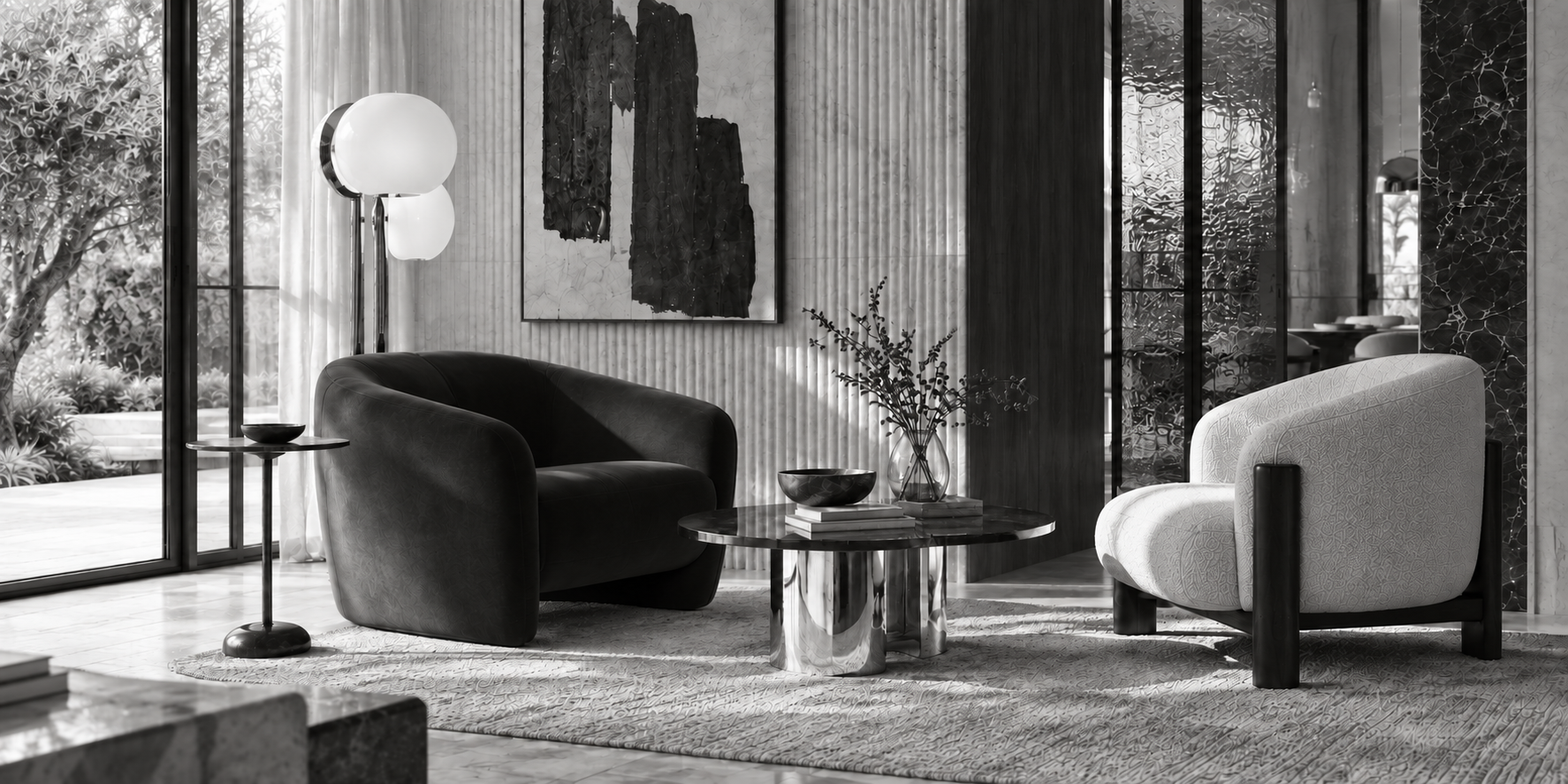
Some changes become visible long before they truly arrive.
Across the international design landscape, a different sensibility is beginning to take shape. Rooms are becoming warmer and more personal. Colours are regaining depth, furniture is becoming more expressive, and materials are once again allowed to reveal their presence. In Dubai, however, much residential design still moves between two extremes.
On one side are immaculately composed interiors in beige, greige and off-white — calm, elegant and sometimes so flawless that little remains visible of the people who live within them. On the other are spaces designed to impress before they have the chance to move us: opulent, polished and filled with so many gestures that the feeling behind them can almost disappear.
Between these two worlds, something else is beginning to stir. A desire for homes that need neither to whisper nor to shout to have a voice of their own. For rooms that feel warm without becoming merely agreeable. For furniture that creates intimacy rather than communicating status. For colours and materials that awaken memory and acquire meaning over time.
Such a shift takes time. Before a new aesthetic can become instinctive, it first has to be felt. The seventies have not returned — nor do they need to. But their attitude can already be felt.
Between Calm and Expression
The restrained aesthetic of recent years has produced many exceptionally beautiful spaces. Pale natural tones, softened forms and carefully balanced materials convey serenity and timeless elegance.
Yet a home should do more than appear harmonious. It should make you feel something. It can welcome you before you have consciously taken in the room. It can offer comfort, awaken curiosity and reveal something of the people who live there. Not every element needs to demand attention, but the room as a whole should leave an emotional imprint.
Perhaps interior design does not need another style, but a new balance: between calm and expression, elegance and warmth, discipline and sensuality. The seventies offer a compelling place to begin.
Not a Nostalgic Recreation
Reconsidering the seventies does not mean reconstructing entire rooms from the period. Nor is it about orange sofas, shag-pile rugs or filling a space with recognisable period references.
Far more interesting is the attitude behind the decade’s finest interiors. They were sensual, generous and confident. Furniture was allowed to be sculptural. Materials carried colour, texture and depth. Comfort was not concealed; it was an essential part of the design.
Above all, these interiors were not timid. They did not attempt to please everyone or conform to a single accepted idea of good taste. That is where their contemporary relevance lies.
Rooms Can Become Softer Again
The seventies changed the way people inhabited their homes. Formal seating arrangements gave way to deeper sofas, lower silhouettes and modular elements that encouraged a more relaxed way of living together. That way of thinking feels remarkably relevant today.
A curved sofa can soften an otherwise linear room. A generous armchair creates a place of retreat. Low tables and rounded forms make a seating arrangement feel less staged and far more inviting.
Not every room needs to be filled with curves. Often, one confident piece is enough to transform the atmosphere. The home becomes less of a perfect composition and more of a place in which people genuinely want to live.
Colour as Architecture
Neutral colours will not disappear, nor should they. They provide a calm foundation and allow materials, art and individual pieces of furniture to hold their own. But perhaps it is time to enrich that foundation.
The seventies palette offers a sophisticated alternative to short-lived colour trends. Tobacco. Cognac. Rust. Ochre. Olive. Aubergine. Chocolate brown. These colours feel warm, grounded and unexpectedly timeless.
They do not need to dominate a room. A tobacco-coloured sofa can become a quiet focal point. Deep olive can give an armchair presence. Rust-coloured velvet, dark timber or a muted brown wall can alter the entire atmosphere without tying an interior to a particular decade.
Colour is no longer something applied afterwards as decoration. It becomes part of the architecture of the room — creating depth, directing the eye and giving the composition character.
Less Perfection, More Personality
Perhaps the most important lesson of the seventies lies not in their colours or furniture, but in their confidence to express a point of view. Their finest interiors were atmospheric, comfortable and occasionally eccentric. They trusted material, proportion and personality. Not everything needed to be restrained. Not everything had to recede.
After years of carefully calibrated neutrality, this attitude offers a way forward — not as a rejection of calm or timeless elegance, but as an expansion of both. Richer colours. More tactile materials. More generous furniture. More individual decisions. Not for effect, but to return identity to the room.
A considered home should not reveal the year in which it was furnished. It may carry traces of several decades, provided every element has earned its place. The seventies may not be back just yet. But they could show us where interior design should go next.