
When Good Taste Became Boring
After years of quiet neutrals and carefully restrained interiors, something is changing. Homes are becoming richer, moodier and more expressive. This isn't the end of restraint. It is the return of personality.
Words by Tizian Lange
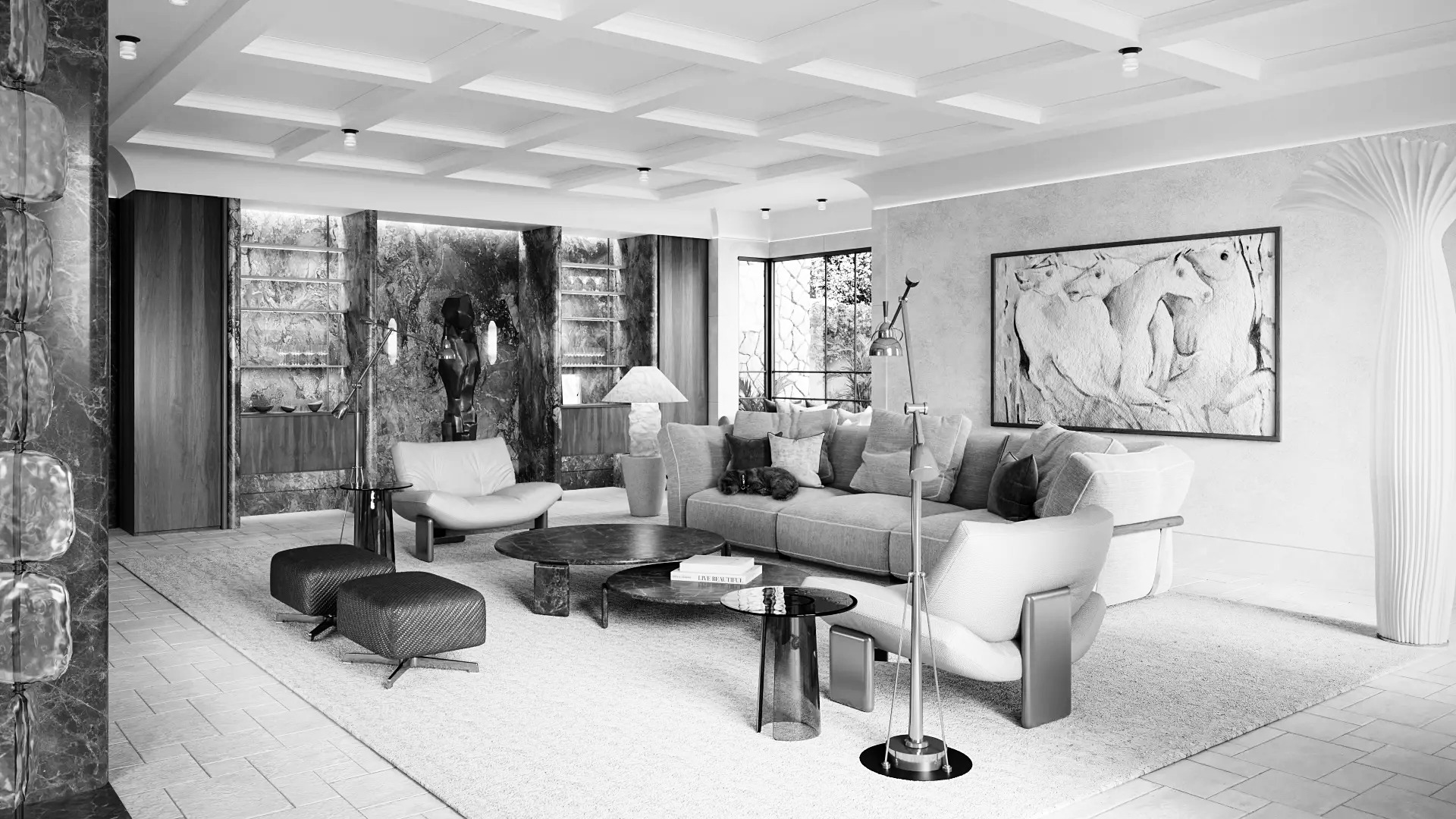
There was a moment when beige felt radical. After years of excess, visual noise and interiors designed to impress, restraint offered relief. Pale oak, limestone, bouclé and chalky plaster softened our homes. Furniture became quieter. Colours disappeared. Everything settled into warm, reassuring shades of sand. It was beautiful.
Then everyone did it.
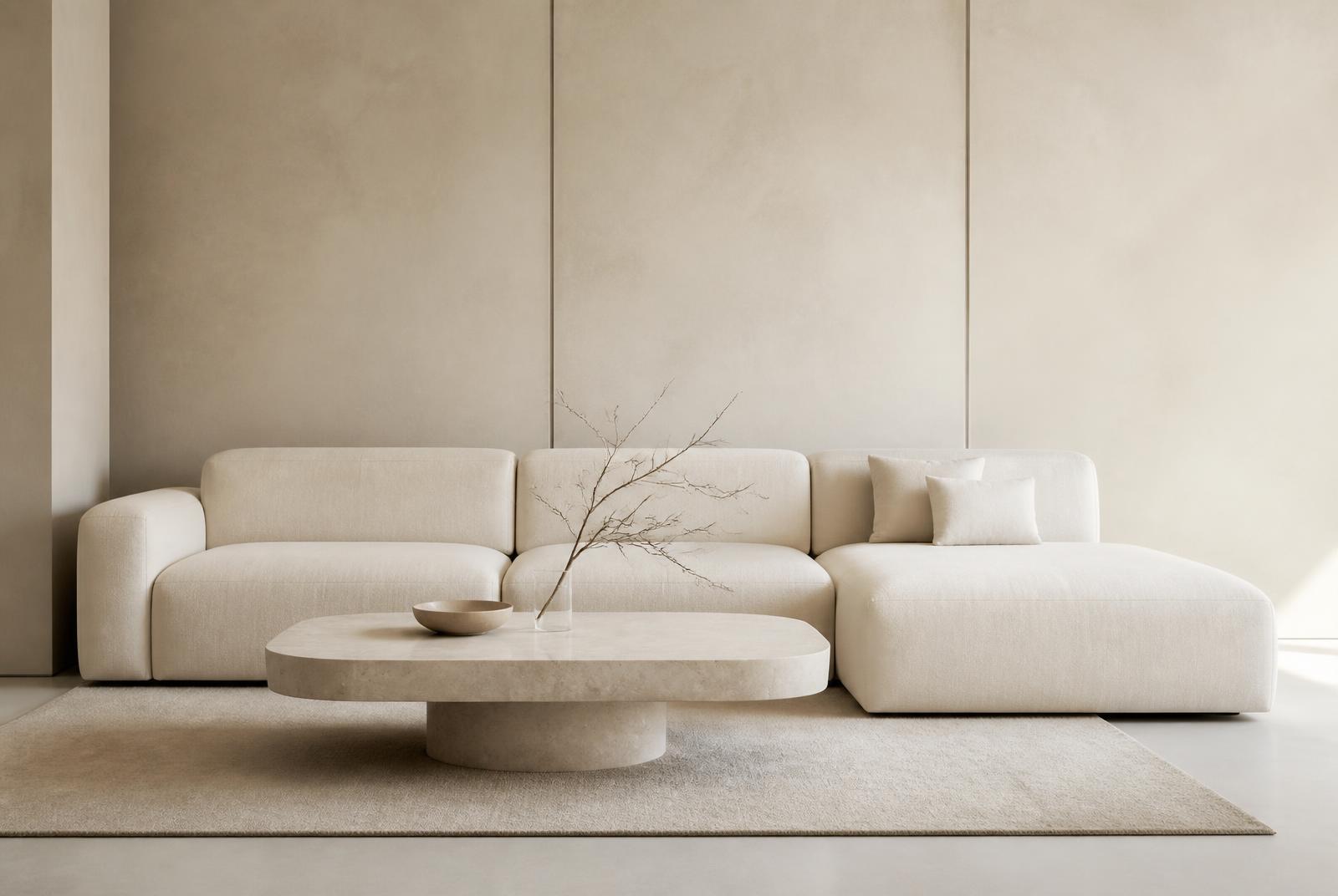
Somewhere along the way, restraint became repetition. Homes in London began to resemble homes in Los Angeles, which resembled apartments in Copenhagen, which could just as easily have been in Dubai. The same curved sofa. The same pale timber. The same travertine table. The same carefully placed branch reaching out of an earthenware vase. Beautiful, certainly. But increasingly difficult to remember.
When Calm Became a Formula
There is a phrase we keep hearing from brokers in Dubai: “Everything looks the same today.”
They perhaps see it more clearly than most. Another listing arrives. Another beautifully finished home. Travertine. Pale timber. Curved furniture. Warm white walls. Individually, there is often very little wrong with any of it. Collectively, it becomes difficult to remember which home was which. That should concern us.
When a prospective buyer can scroll through five multimillion-dollar homes and struggle to distinguish one interior from the next, we have to ask whether our pursuit of timelessness has accidentally produced sameness.
Because there is nothing inherently wrong with beige. Some of the most beautiful interiors ever created are almost entirely neutral. Natural stone, linen, timber and plaster have an honesty we will probably never tire of. The problem begins when neutrality replaces thought.
Perhaps we simply became too good at being tasteful. And taste without character can become remarkably boring.
A home should reveal something about the people who inhabit it. Where they have been. What they collect. How they entertain. The books they return to. The art they cannot stop looking at. How they prefer the light at the end of the day.
Yet much of the aesthetic that dominated recent years seemed determined to remove precisely those things. Personality was edited out in pursuit of perfection. Rooms became serene, immaculate and extraordinarily photogenic. They performed beautifully on a screen. But sometimes they left us feeling very little.
Somewhere in the pursuit of calm, interiors began to lose their pulse. And perhaps we are finally beginning to miss it.
The Return of Atmosphere
Look around now and something interesting is happening. Timber is deepening from pale oak into walnut, rosewood and mahogany. Burgundy, tobacco, olive and chocolate are finding their way back into rooms. Marble is being allowed to have veins again. Lacquer is reflecting pools of warm light. Chrome and polished metals are appearing against dark woods. Art is becoming larger and less polite. Even brown — for years treated almost apologetically — suddenly looks rather sexy.
But this isn't really about colour. It is about atmosphere.
A deep red stone that transforms a small room into something almost theatrical. A low lamp illuminating only the corner where somebody actually wants to sit. The reflection of an artwork in lacquer. Books accumulated rather than colour-coordinated. Plants allowed to become part of the architecture.
There is shadow again.
There is mystery. There are rooms that look entirely different at midnight than they do at noon. And shadow, it turns out, can be incredibly luxurious.

Some have begun calling this emerging language Modern 70s. Others see it as a new interpretation of mid-century design. There is truth in both.
The seventies understood sensuality particularly well. Furniture sat lower. Timber was darker. Glass was smoked. Leather, chrome, stone and lacquer lived comfortably beside one another. Lighting created islands of intimacy rather than illuminating every surface equally. Homes were filled with art, plants, books and objects that didn't necessarily match but somehow belonged together. Those interiors were not afraid of mood.
That is what feels relevant again. Not the decade itself. Nobody needs to recreate 1974. What interests us is the confidence those rooms possessed: the willingness to let an interior be dark, glamorous, eccentric, intimate or deeply personal without feeling the need to explain itself. The best contemporary spaces borrow that confidence without borrowing the costume.
Calm Doesn't Have to Be Beige
There is another assumption worth challenging: that a calm home must also be visually quiet. We don't believe it does. A room can contain deeply veined marble, dark walnut, expressive art and an extraordinary piece of lighting and still feel completely serene.
Calm does not come from removing character. It comes from coherence. When proportion is right, when materials speak to one another, when the lighting understands the architecture and when every object has a reason to be there, richness does not necessarily create noise. Sometimes it creates depth.
Perhaps that is the distinction we're beginning to rediscover. For years, we pursued visual calm. What we increasingly want is emotional calm. The first can be achieved by taking things away. The second comes from feeling that everything belongs.
Real homes are not silent. They contain rituals and obsessions. Art bought on travels. A chair somebody refuses to part with. Books with cracked spines. Objects inherited from people we loved. Materials that become more beautiful when touched. A dog asleep somewhere it probably shouldn't be. These things matter. They are what separate a beautifully designed property from somebody's home.
And perhaps this is why the emerging interiors feel so refreshing. They seem less interested in perfection and more interested in presence. Not messiness. Not decoration for decoration's sake. Life.
A home with soul does not necessarily reveal itself in one photograph. There may be corners that are deliberately dark. Objects that make sense only when their story is known. Materials chosen partly because of how they will look ten years from now. It becomes more beautiful through familiarity. That is difficult to reproduce with a formula.
There is perhaps another reason so many interiors began to resemble one another. We increasingly discover design through the same screens. The same images circulate. The same references are saved. The same rooms are reposted thousands of times. Inevitably, certain combinations become shorthand for good taste.
Algorithms are extraordinarily good at showing us more of what we already like. Design should do something more difficult. It should reveal what we did not yet know we liked.
That requires listening. Curiosity. Instinct. And occasionally the confidence to make a decision that would never survive a mood board assembled by consensus. A remarkable home should not feel as though it was designed for everyone. It should feel unmistakably yours.
The New Luxury Is Personality
We don't believe the future of interiors is colourful or neutral. Minimalist or maximalist. Contemporary or nostalgic. Those distinctions are becoming less interesting. The homes that excite us now move comfortably between them.
A quiet limestone floor beneath a wildly expressive piece of stone. An immaculate piece of joinery beside something old and imperfect. Deep walnut against an almost colourless wall. A serious artwork beside an object that makes its owner smile.
Calm remains. Restraint remains. Beige remains too. But beige no longer needs to carry the entire room.
And if there is one thing we hope disappears with the beige era, it isn't the colour. It is the fear of personality.
Because the answer to boring beige is not colourful maximalism. It is not Modern 70s. And it certainly isn't another palette waiting to be copied until every home begins looking the same again. Perhaps what we are witnessing is something much more interesting. A return to atmosphere. A return to instinct. A return to rooms that could belong to no one else.
The end of boring beige isn't really about beige at all.
It is about giving the home its soul back.