
Marble Has a Past
Before a stone reaches your home, it has already lived a long life. A reflection on how marble forms, how it is chosen, and why it belongs to the slow materials.
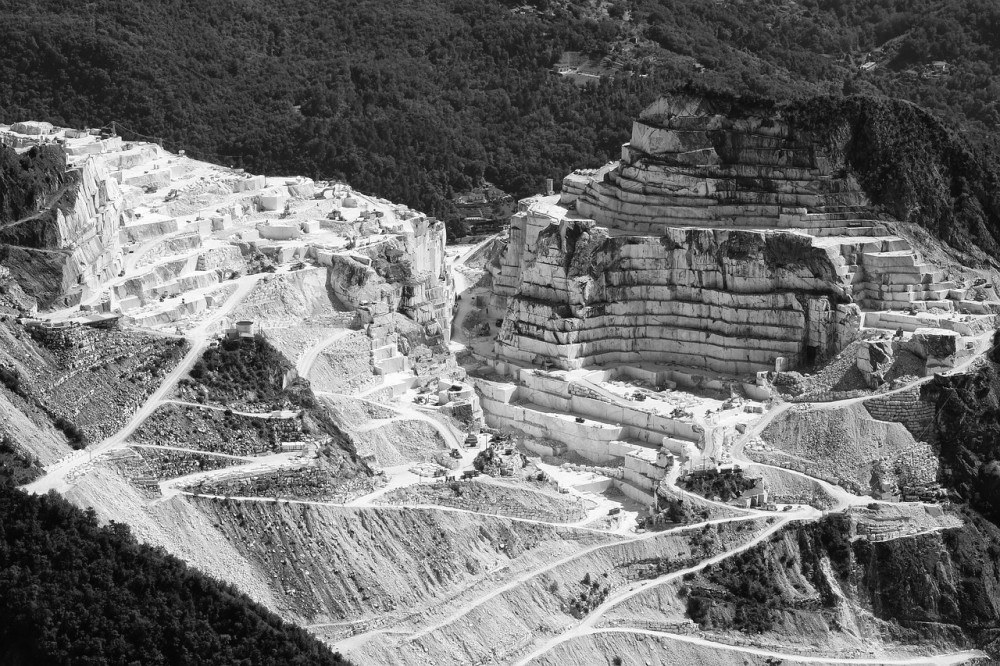
Marble usually enters a project looking impeccably composed: cut, polished, labeled, and leaning against a wall in the stone yard.
By then, it appears ready to become a floor, a basin, a table, or an entire wall.
But marble had a life before the moodboard.
So, what is marble? At its simplest, it is limestone or dolostone transformed by immense heat and pressure over millions of years.
Long before we paired it with walnut, bronze, or brushed steel, it spent millions of years beneath the earth—compressed, heated, fractured, and transformed.
Limestone with a dramatic past
Marble begins as limestone or dolostone, often formed from calcium-rich material deposited on ancient seabeds.
Later, heat and pressure transformed the rock without melting it. Its minerals reorganized into a dense crystalline structure—a process known as metamorphism.
Even the quietest white slab is the result of immense geological force.
Every vein tells a story
Pure marble is white. Its color comes from other minerals held within the stone.
Iron creates tones of gold, rust, pink, and red. Graphite produces darker markings; serpentine can introduce green. Mineral-rich fluids moving through fractures leave behind the veins revealed when the block is cut.
A vein is not decoration. It is evidence.
This is why two blocks from the same quarry can look entirely different. One may be restrained; another intensely expressive. Neither is inherently better. The question is what the space requires.
The first cut is the big reveal
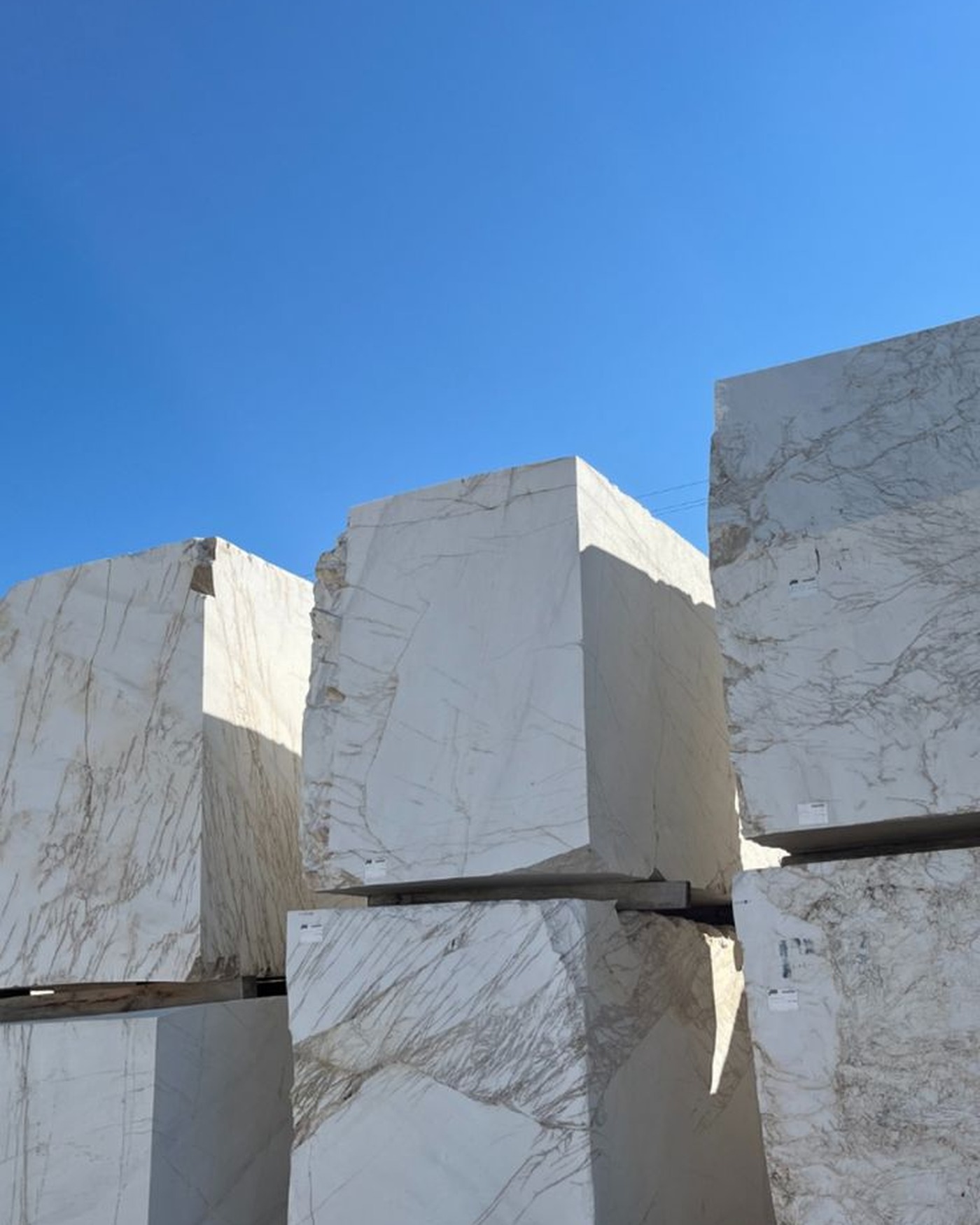
The outside of a marble block offers only a hint of what lies within. Its full composition appears with the first cut.
The direction of that cut can transform the stone’s character. One orientation reveals long, linear veins; another creates softer clouds and broader movement.
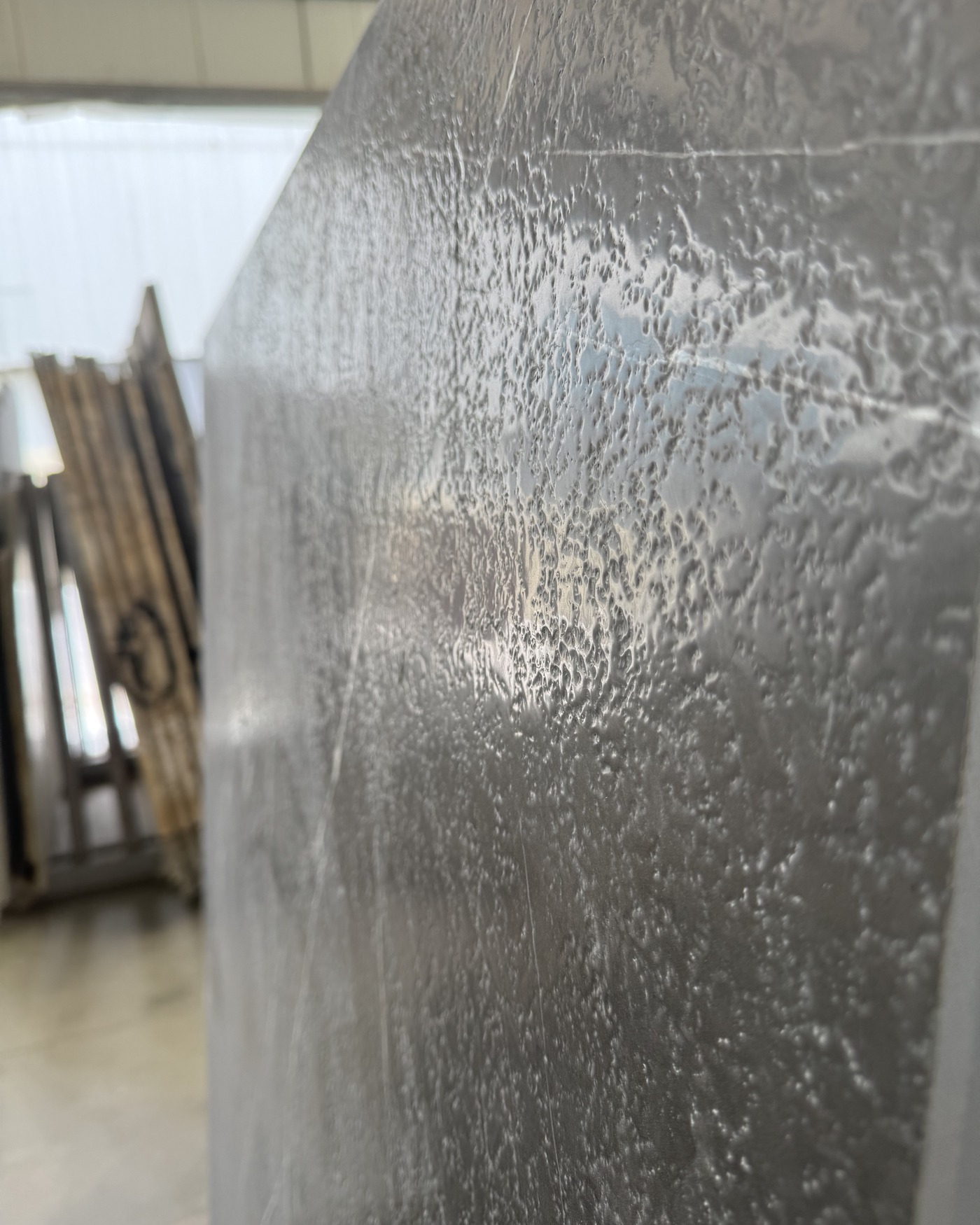
Finishing changes it again. Polishing intensifies color and reflection. Honing creates a quieter surface. Brushing adds texture and depth.
The finish determines not only how marble looks, but how it responds to light, touch, and time.
A slab is only the beginning
Selecting the stone is the easy part.
Each slab must be considered at full scale. Veins can be mirrored, continued, turned around corners, or deliberately interrupted. A dramatic section may belong on a wall; a quieter area may be better suited to a basin or table edge.
One cut can make the result feel composed—or accidental.
Geology provides the composition. Design decides how much to edit.
Marble refuses to behave like porcelain
Marble is enduring, but it is not immutable.
Acids may gently dull its surface. It can scratch, stain, and develop a patina. A worktop records use; a floor remembers movement.
This is not a failure of the material. Marble simply refuses to remain untouched.
Over time, edges soften and surfaces become quieter, carrying a subtle record of how they have been lived with.
To use marble well is not to place it everywhere. It is to recognize where its presence matters.
— LANGE
Let the stone speak
Marble is often used as shorthand for luxury. Its real value is more complex.
It holds ancient sediment, geological pressure, mineral change, skilled extraction, and careful human judgment.
To use marble well is not to place it everywhere. It is to recognize where its presence matters.
Sometimes that means a single threshold. Sometimes a table touched every day. Sometimes a wall large enough to reveal several consecutive slabs.
Nature has already done most of the work.
The designer’s task is to understand when to intervene—and when to let the stone speak.